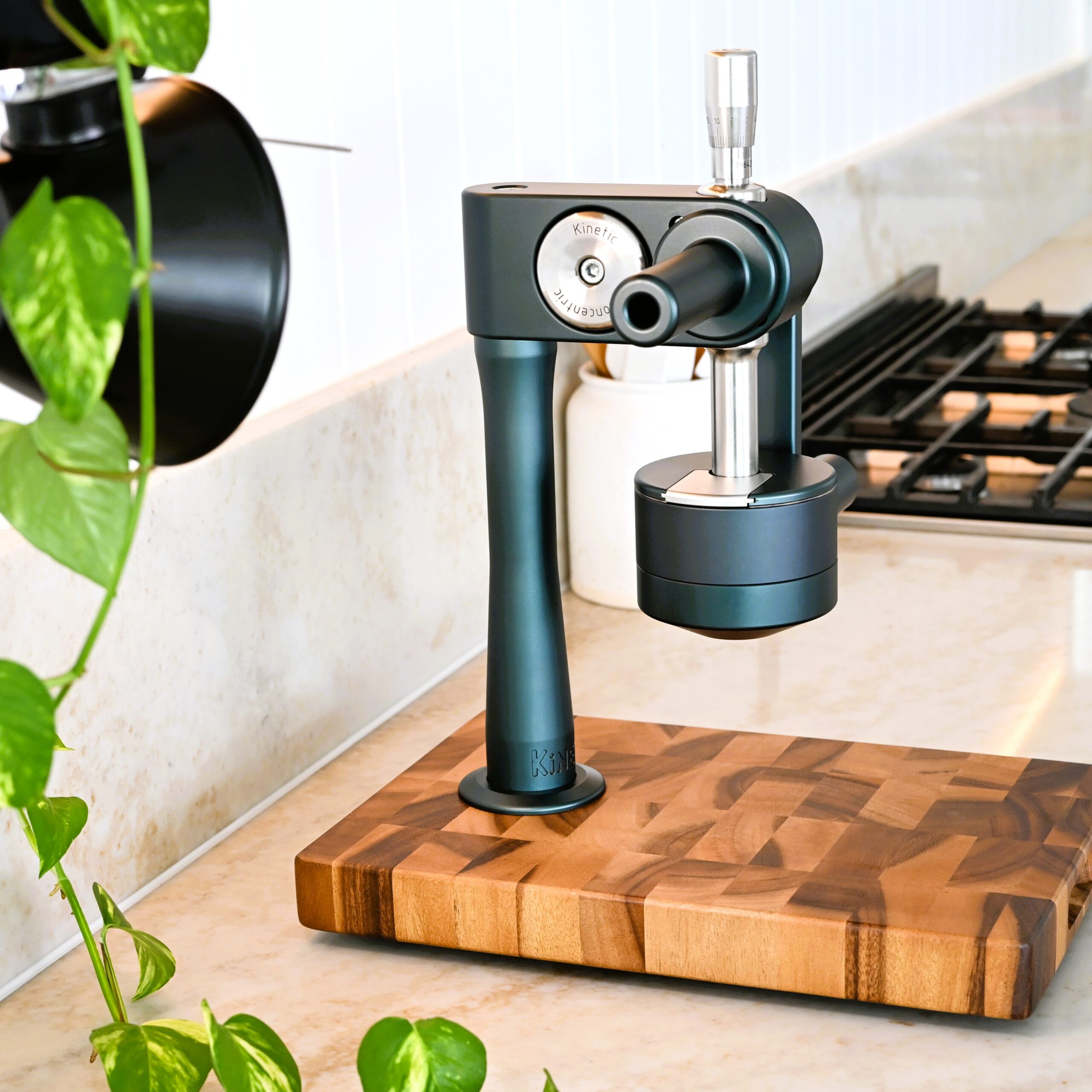
Machines made to last.
No motor, no screen, nothing to update. Espresso equipment designed by one person who wanted it to exist — then built properly.
Fifteen seconds of your morning. A lifetime of the machine.
Grinding 20 g for espresso by hand takes about fifteen seconds on the Concentric. In exchange you get silence, no electronics to fail, and a grinder that will still be working when the appliances around it have been replaced twice.
Four ideas, one machine.
Most hand grinders are a burr on a stick. This one is a small piece of machinery — scroll and each part explains itself.
A flywheel, geared up 6.5 to 1.
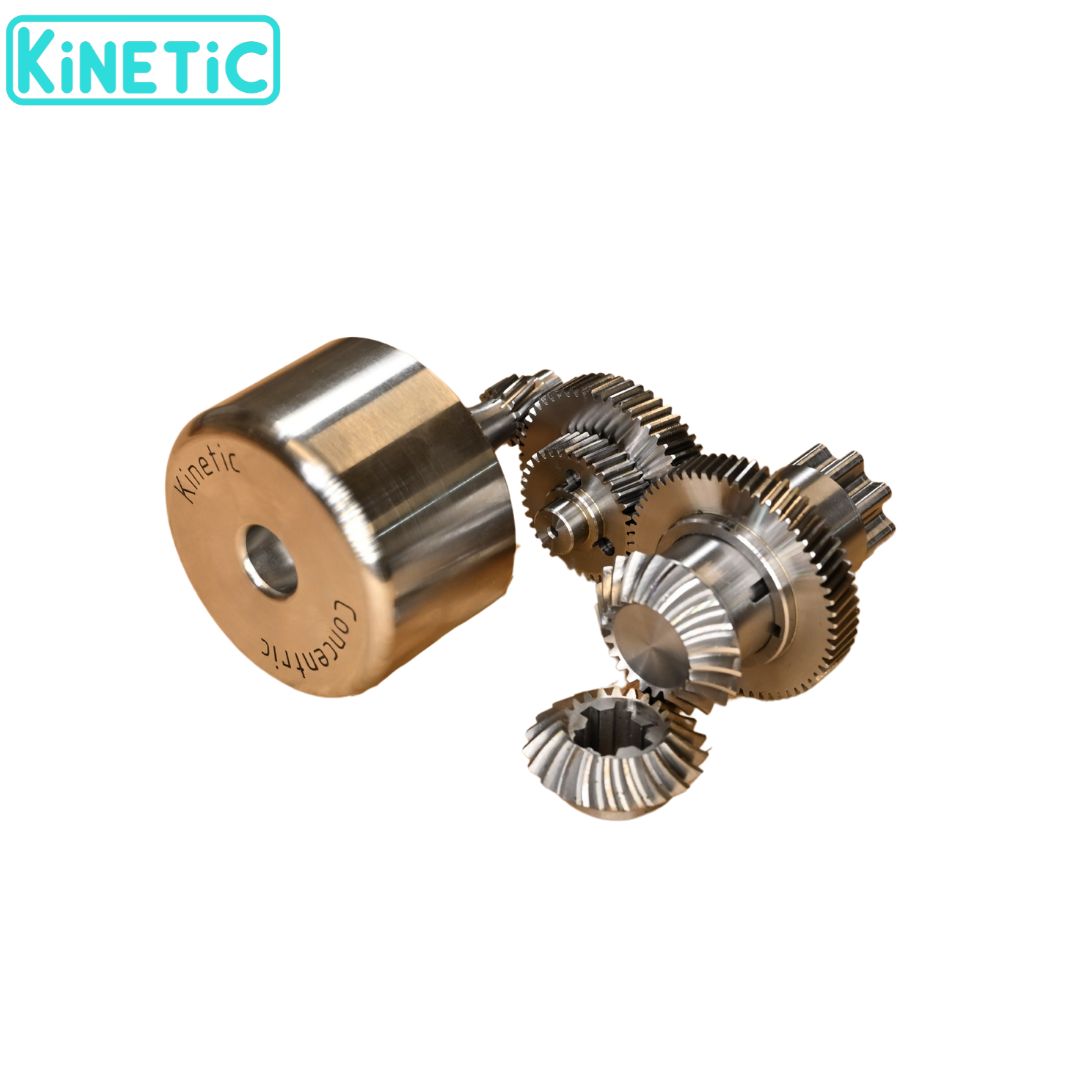
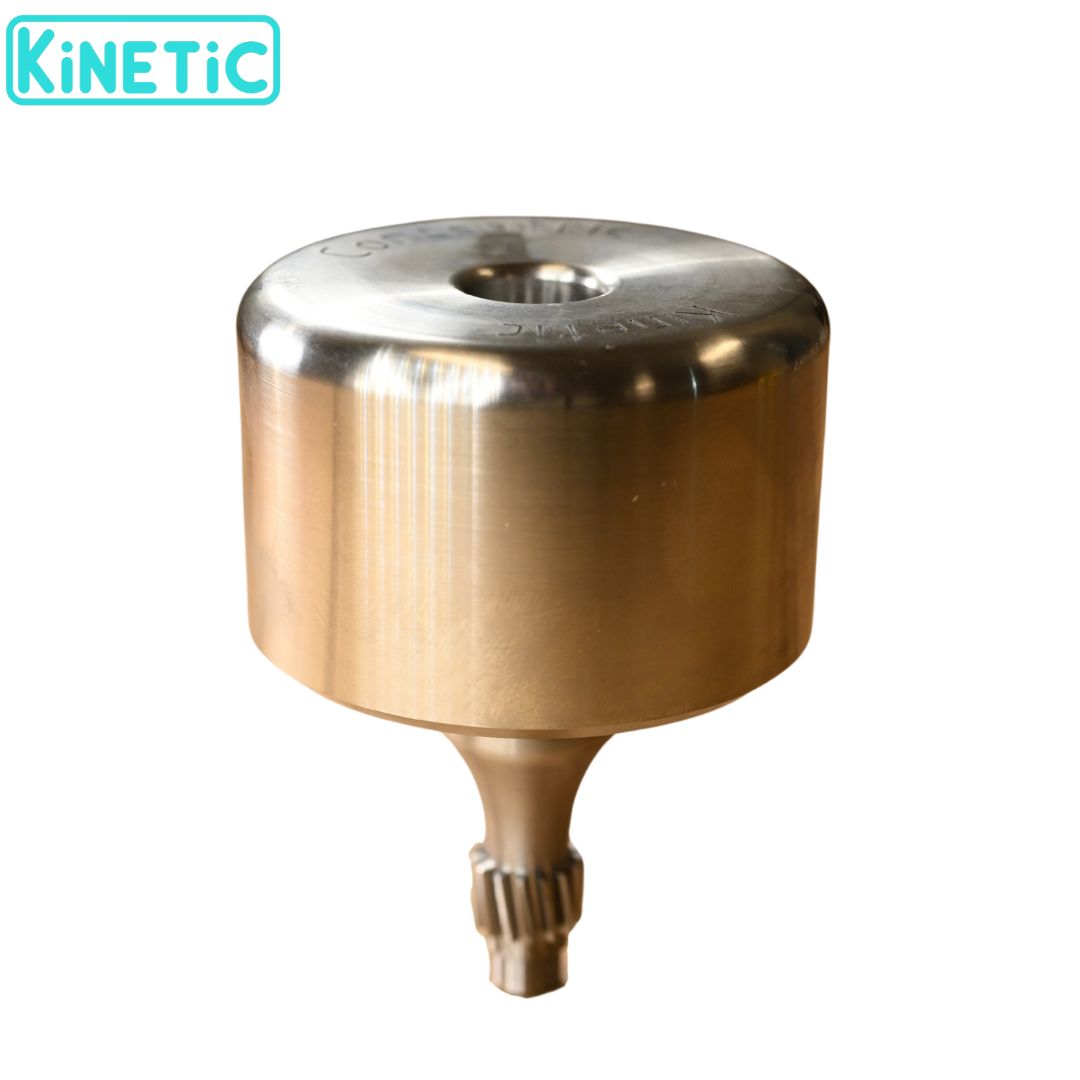
The crank turns a bevel pair that drives the burr at exactly crank speed — one turn of the handle, one turn of the burr. Off the same shaft, a spur train spins an 820 g stainless flywheel at six and a half times that.
Stored energy rises with the square of speed, so a wheel only 60 mm across carries 42 times the energy it would have bolted straight to the crank. You feel it as a steady pull through the bean instead of a stall on every hard one. It is the engraved disc on the front of the head — you can watch it run.
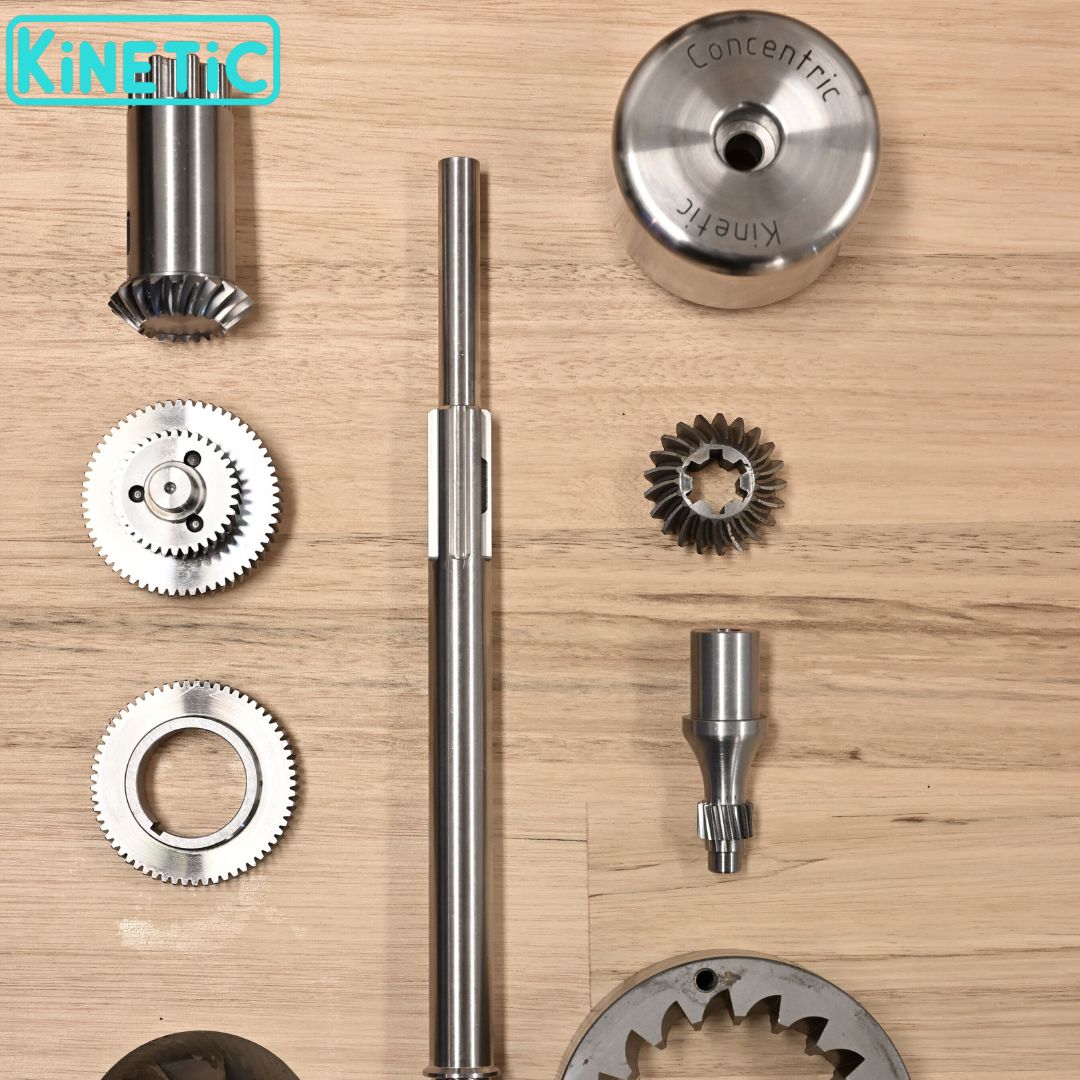
Both burrs live on the same carrier.
The drive shaft runs down the centre of a torque tube. The torque tube carries the outer burr; the inner burr’s bearing is mounted on that same carrier. Whatever load you put through the handle, and however the metal moves with temperature, the two burrs move together and stay centred on each other.
That is the whole reason the grinder is called the Concentric, and it is why the grind is the same on the last bean as the first.
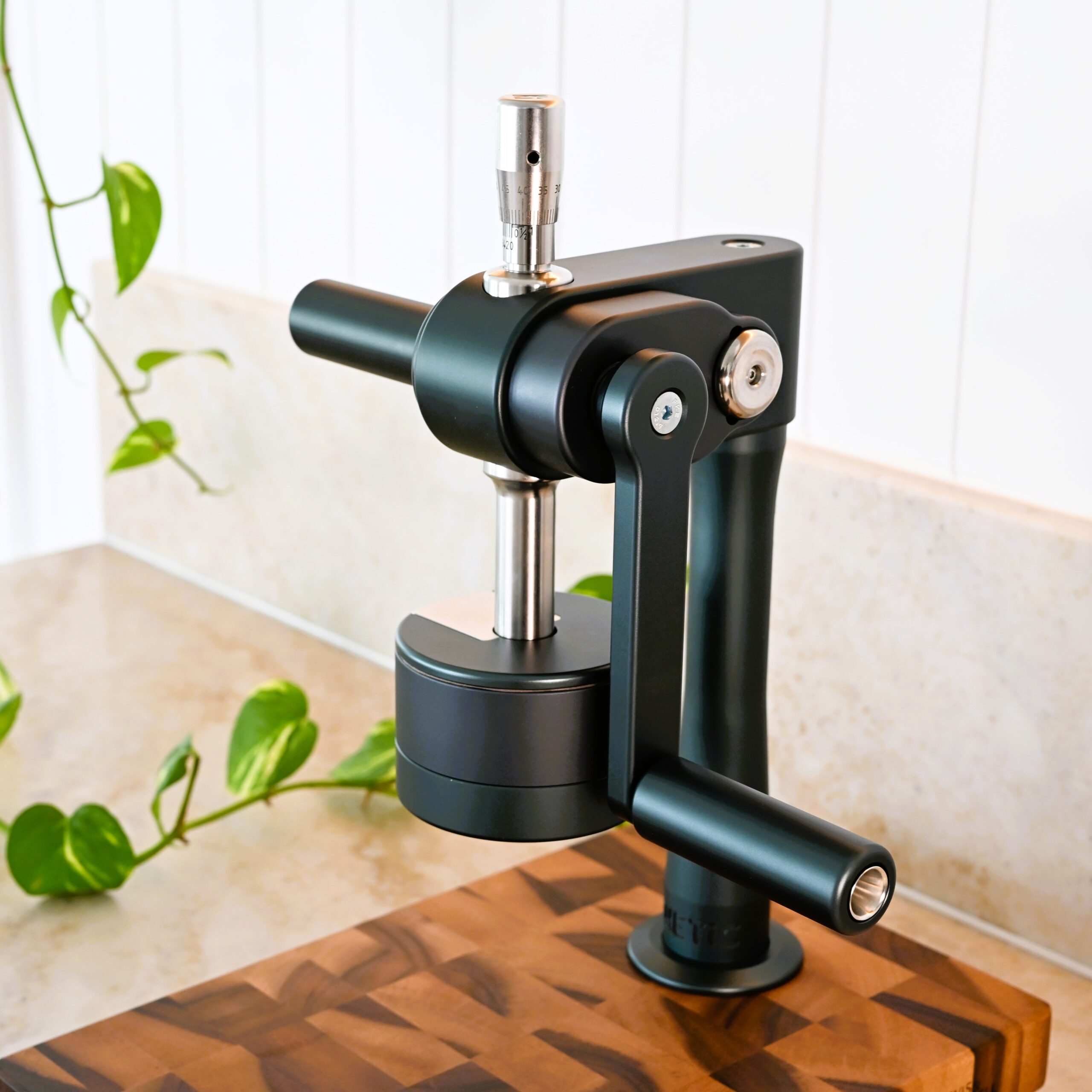
Stepless. Read to a thousandth of a millimetre.
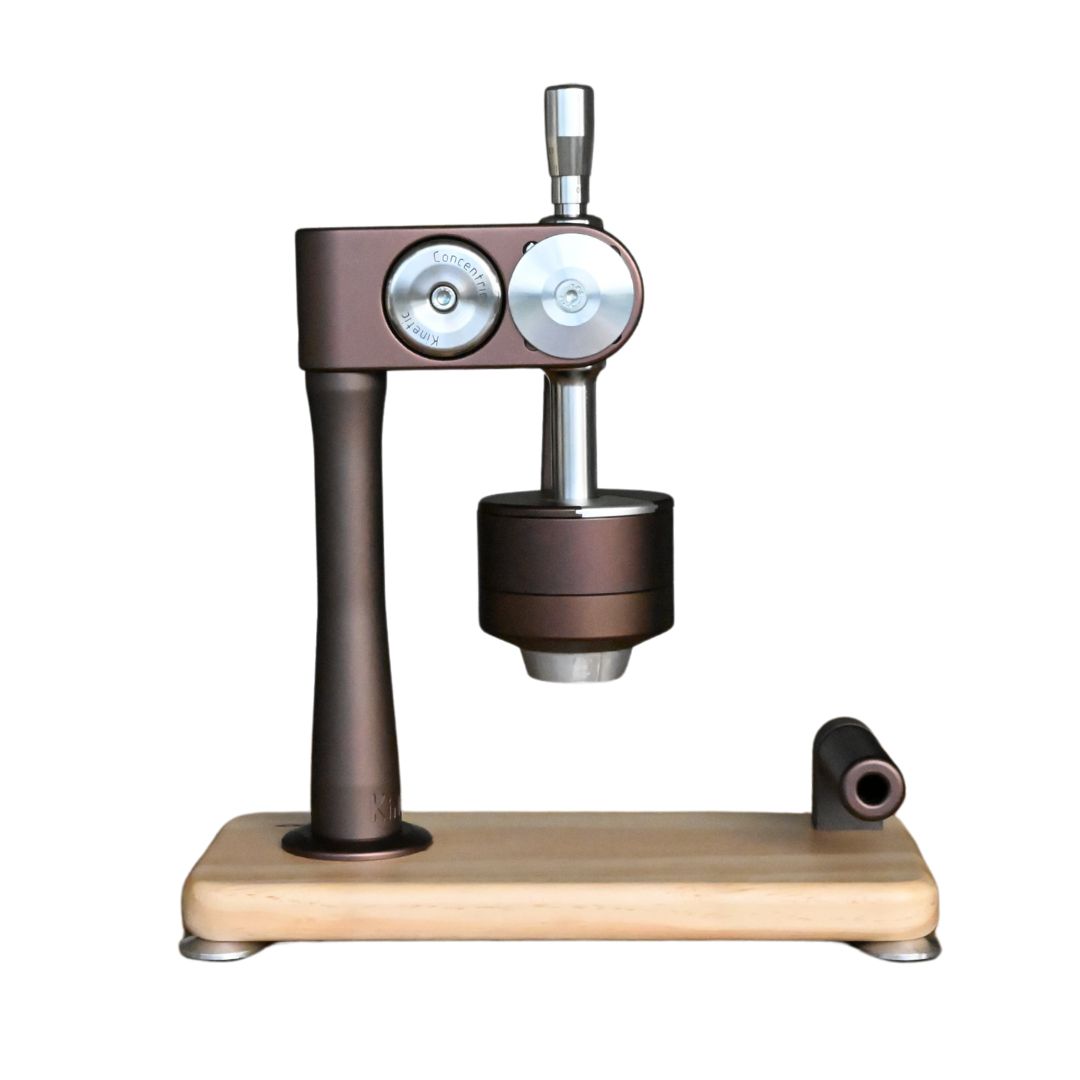
The knob on top sits on the drive shaft itself. Turning it moves the inner burr up or down the shaft — no clicks, no detents, just a thread and a vernier scale marked in 0.001 mm.
Because the dial turns with the shaft, there is no play between what it reads and where the burr actually is. And because the burr turns 1:1 with the crank, the scale is facing you every time you stop.
Straight down and out — one hand on the crank, one on the handle.
Grounds leave through a machined aluminium chute at the base of the burr housing — a short, vertical path with nowhere to hide, so what you weighed in is what comes out.
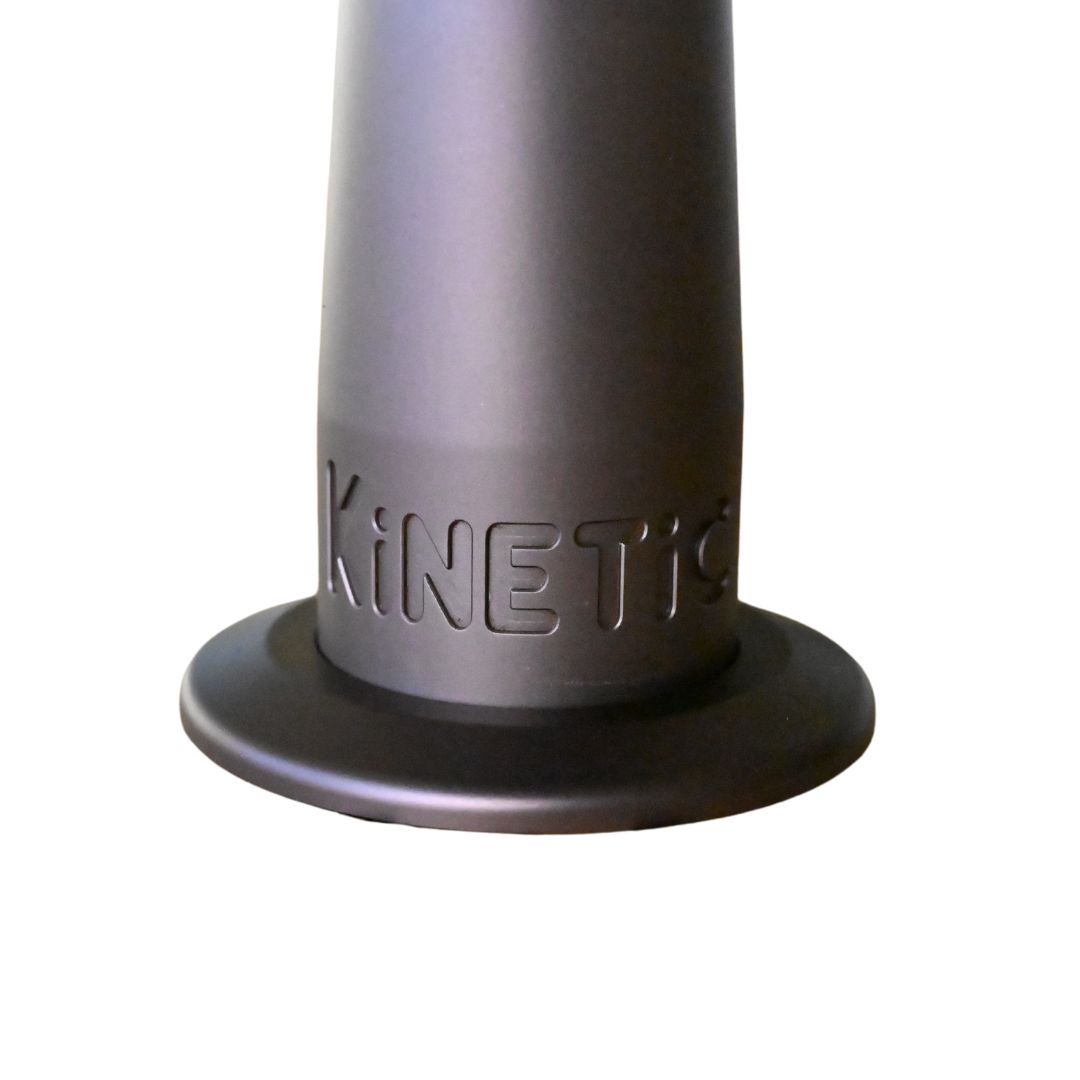
The tube on the base is a handle. Hold it with your free hand and the whole machine stays planted while the other hand cranks — no chasing it across the bench. Along the whole bean path the only plastic is a bearing seal.
Genuine materials
316 stainless steel, 6061 aluminium anodised and bead-blasted, hardwood. Nothing chromed, nothing coated to hide what it is. The bean path is plastic-free.
Mechanical, not electronic
Gears, shafts and a flywheel do the work. Stepless adjustment marked to 0.001 mm. There is no firmware, no app and no Wi-Fi to fall over.
Serviceable at your kitchen table
Every part is visible and reachable with ordinary tools. If something wears in twenty years, you replace that part — not the machine.
First up: the Concentric
Concentric
83 mm conical burr bench-top hand grinder. Stainless flywheel geared 6.5:1, 1:1 burr-to-crank, 8.5 kg. Four anodised colours.
More designs are on the bench.
There is more coming through the workshop. If you want to know when the next one lands, the news page is where it appears first.
Bought once. Kept.
- Shipped worldwide, packed like it matters
Every machine leaves the workshop assembled, tested on beans, and crated for the trip.
- Instructions you can actually follow
Set-up, dialling in, cleaning and a full strip-down are documented with photos, written by the person who designed it.
- A real reply
Questions go to simon@kineticespresso.com and are answered by someone who has had the machine apart.
I design the machines I wanted to own.
Before Kinetic I built mechanical products in a different industry — gears, cams and levers. Kinetic is the same way of thinking pointed at coffee: what a machine built a hundred years ago would look like if it were designed today, with today’s materials and tolerances.
None of it is cheap. All of it is meant to outlive me.
About Kinetic